
1. Introduction
Clothing has to deal with the clothes, accessories and cloths which are used by people to protect and cover their bodies. It is among the fundamental needs of human beings in that it is not only needed to safeguard one against weather conditions such as heat, cold, rain, and wind. Another aspect of clothing is cultural, social identity, individuality, and fashions. Over time, the various kinds of clothing range have developed in features which used to be simple according to the animal furs and plant materials, but advanced to sophisticated features when used in production of the new developments based on the exploitation of the advanced fabrics and techniques. Clothing is no longer a mere necessity of daily life, today it has become an extremely potent vehicle of self-expression and creativity coloring traditions, technology and the fashion industries around the world.
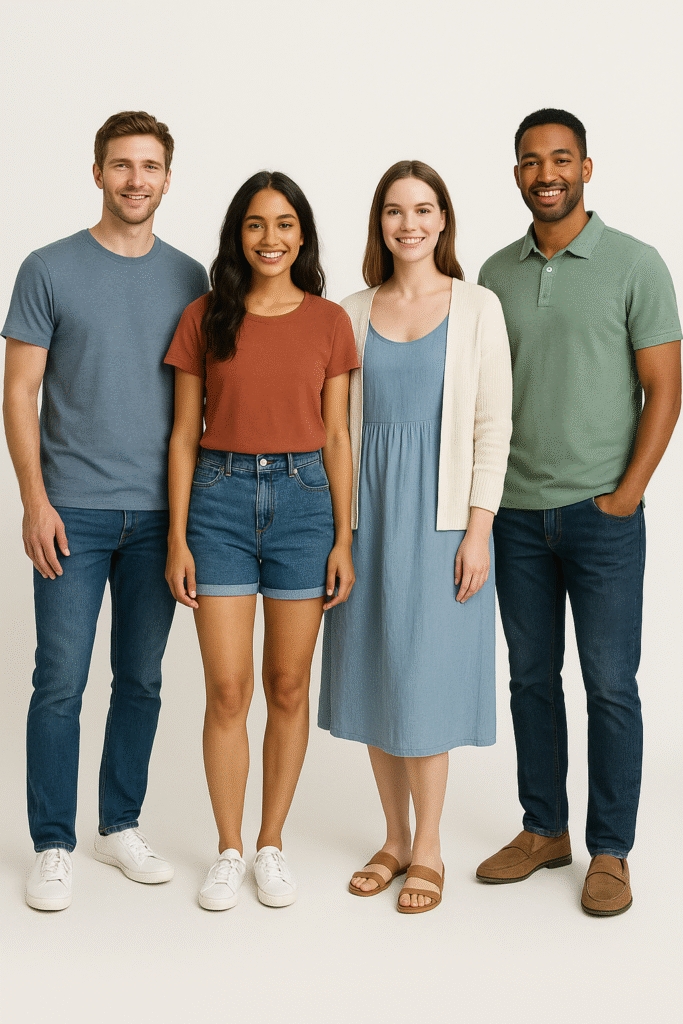
The importance of clothes in human life.
Although clothing is mankind basic need, it should be noted that it is a crucial aspect in everyday life as it affects comfort, self and socializing. We may say that it is vital in the following ways:
- Protection Clothing protects the body against the climatic influences like heat, cold, rainfall, wind, or any other destructive UV rays.
It also acts as a shield against the physical hazard, insects and harmful substances in some work conditions. - Humility and Social Tradition Clothing assists people in conforming to the standards of decency enforced by their culture, religion or society.
Each society has particular rules of dressing, which indicates common values and customs. - Identification with Performance Clothes speak of personality, ways of life and mood.
It may indicate group, occupational, or social identification, eg, character uniforms, graduates in robes. - Fashion and Aesthetics Apparel gives individuals the opportunity to express their creativity and taste, to remain fashionable or to come up with a unique style of their own.
Fashion as a way of expression and it is usually associated with the existing socio-cultural changes. - Prestige and Social Status Social status refers to the position that individuals hold in society. It is a concept that deals with the status of individuals within the society and how they relate to others. There are various types of status within the society and the status of members of the society keeps changing or transforming. The status that an individual holds has an influence on all aspects of life in the community. Status in society Social status involves the standing of individuals within the society and the relationship that the individuals have with other people. The status of a person in the society determines how he or she will be treated by the people in the society. There Clothing is often used as an indicator of richness, status or power such as the case of luxury products or dressed attire.
- Psychological Impact Certain clothes can be worn to enhance self body confidence and self esteem.
Colors, fits and designs may affect moods and perception.
The History of clothing dates back to prehistoric era whereby early people used animal skin, leaves, and other plant fiber to wear to keep them warm during the harsh weather. With the evolution of civilizations, individuals started spinning of cloth such as wool, cotton and silk, which they designed to fit their climate and culture. Ancient Egyptians dressed in light linen in the hot deserts, Romans were dressed in the togas of wool in the colder areas. As time went by, dressing became a way of showcasing social status, identity and fashion in the place of a mere functional clothing. Mass production of clothes appeared with the Industrial Revolution that took place in the 18 th -X9 th centuries. Modern clothing incorporates modernity to the traditional practices by creating designs using innovated fabrics, world fashion, and eco-friendly designs.
History (a brief clothing history contribution by India)
The practice of clothes originated during pre-historic era when human beings wore animal and bark skins or fibre of plants to keep off environmental elements. As civilizations grew, man mastered the art of weaving such clothes as wool, cotton and silk and fashioned it to suit the weather and culture.
India has contributed very much in the history of clothing.
- Cotton was one of the first crops grown and woven by people in India (as early as 5000 BCE in the Indus Valley Civilization).
- The artisans of ancient India perfected the art of natural dyes, and in particular indigo, became a valued international commodity.
- The Indian silk, muslin, and chintz were part of the traditional textiles and traded across the world via the Silk Route and the sea route, affecting the fashion trend in Asia, Europe, and Africa.
- Rather than being based on clothing to show cultural diversity, the variety of Indian garments such as sari, dhoti and turbans indicated the good craftsmanship of textiles.
When time passed, it turned out that clothes were not just something to cover up with but a means of identifying a person, his or her status, and style. Machine manufactured fabrics, they developed during Industrial Revolution but hand woven fabrics in India made India renowned. Indian garments and textiles continue to be a major source of world-renowned clothing designs, even in the current times, standing on two different ends of the spectrum of ancient and advance veins.
Types of Clothing
By Occasion
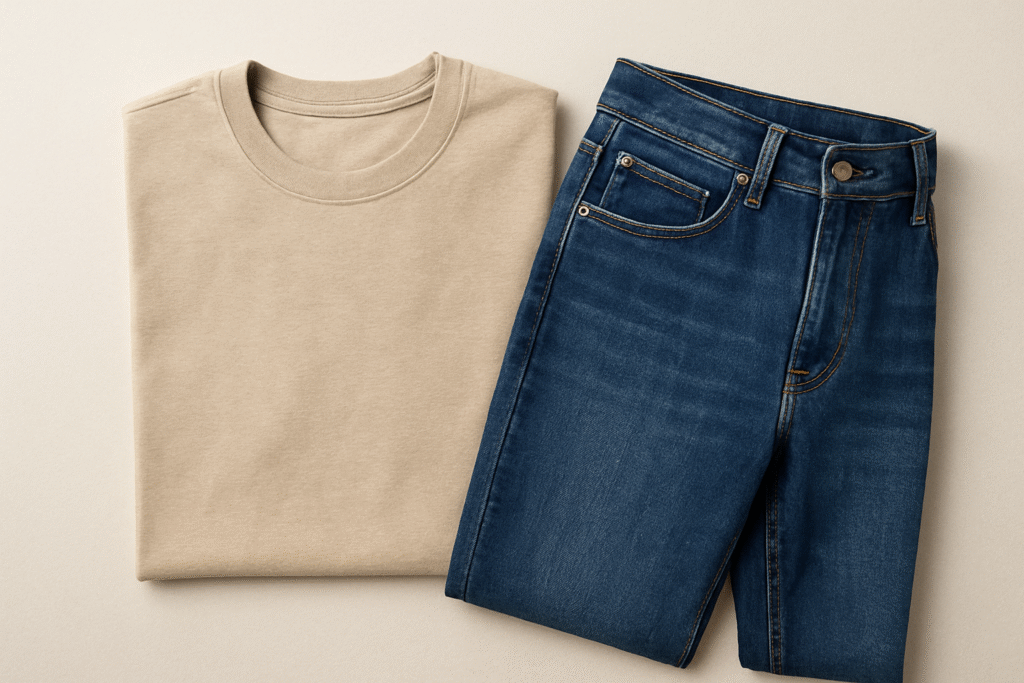
1.Casual wear
Casual wear refers to day-to-day easy, comfortable attire which individuals adopt on occasions such as home, out with friends, shopping or casual workplaces. It is less concerned with the dress codes and more to do with comfort and personal style.
2.Formal wear
Formal wear, dress that is intended to be worn has some type of official, professional or special occasion where it is desirable to be neat and polished and well dressed.
The two most significant features are:
Formal clothing is more detailed and advanced as compared to casual wear.
They are mostly well-manufactured using nice fabrics and they are made to be elegant.
3. Sports Wear
what is Sportswear?
Sportswear is a term used to denote clothes and footwear specifically designed to engage in physical activity, sport, exercise and outdoor activities.
It is created on comfortable, lightweight, stretchable, and breathable fabric which provides easy movements, absorption of sweat and body coverage in the performance of physical activities.
Crafted out of materials such as polyester, spandex, nylon or dry-fit.
Cures and minimizes damage.
It is designed to low body temperature and sweat regulate.
Prevents and reduces injury.
Q1. What size should I order?
Ans. You may consult our size chart which is shown on every product page. Measuring yourself and comparing the result with our chart is as well suggested by us. In case you fall in between sizes, we recommend that you take up a size bigger to wear.
Q2. What do you wear?
Ans. We use high quality materials like cotton, denim, polyester, linen and combinations that make our clothes. The details of fabrics are shown on each product page to allow you to make a choice based on your preference.
Q3. What is the best care of my clothes?
Ans. The majority of our products can be washed by machine in cold water and delicate soap. Please refer to washing instructions on the product label or product description on fragile materials.
Q4. What is your shipping?
Ans. We have the standardized and express shipping. Standard orders should take 4-7 business days and express delivery time is 1-3 business days. There are tracking details that are given after your orders are shipped.